
Salespeople who stick to the script generate:
26% more revenue per conversation
21% better conversion rates
Is excelling at government sales an art or a science? The unhelpful—but accurate—answer is that it is both. Great salespeople are often charismatic and articulate; however, they are just as often, and perhaps more frequently, methodical and consistent.
Without an established blueprint for achieving this balance, how can organizations consistently foster sales success within the complex and information-rich environment of government contracting? And just how significant is the divide between average and top performers?
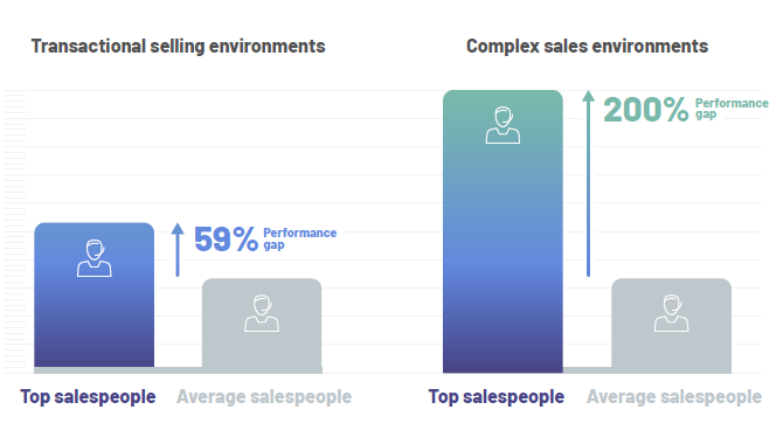
Drawing upon more than 35 years of government contracting (GOVCON) experience, STAHL’s customer data indicates that, in transactional selling environments, there is a 59% performance gap between average and top-performing sales pro. That gap increases to a staggering 200% in highly complex sales environments such as federal government contracting. It does not take more than some quick napkin math to see that this gap has major financial implications.
Given this fact, it is no surprise that STAHL USA’s Business Development (BD) and Contract Center of Excellence leaders are focused on elevating partner performance and closing this gap across its Best-In-Class Joint Venture ecosystem. In pursuing this objective, however, it is important to recognize a more human aspect of the government sales environment: there is a direct correlation between Account Executive (AE) agents’ experience and performance. Simply put, happy AEs perform better, and high-performing AEs tend to be more satisfied and engaged in their careers.
In 2023, STAHL published its Sales Performance and Gap Analysis report for its partners, revealing a significant disconnect between top and bottom performers. The report found that organizations leave up to 58% of potential revenue unrealized.
More importantly, the analysis identified a practical path to narrowing that gap by highlighting four key behaviors that top performers execute more consistently and effectively than their peers:
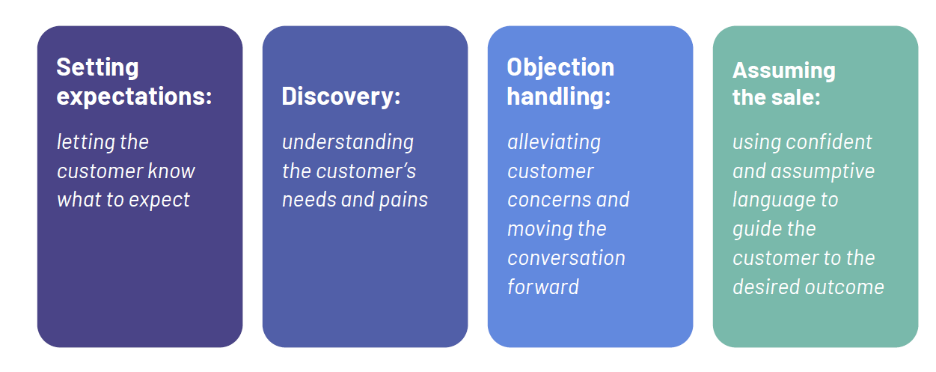
Setting the expectations:
STAHL’s line of thinking—one that views sales performance as primarily behavior-driven—is widely shared across the industry.
According to STAHL research findings, 67% of partner sales leaders in revenue-generating roles believe they have identified the key behaviors that drive partner conversion, and 85% believe that increasing adherence to these behaviors would improve overall sales execution.
However, our perspective has evolved since our initial analysis of the sales performance gap, informed by a significantly expanded dataset of sales conversations and opportunity outcomes.
Through this broader analysis, we have found that performance is not solely driven by a fixed set of behaviors, regardless of how effective those behaviors may be in aggregate.
In practice, there is no universal, one-size-fits-all playbook that applies consistently across every contract, industry, or pursuit type. Instead, improving predictability requires a more granular focus—linking behaviors to measurable outcomes, understanding the performance metrics used to evaluate top Account Executives (AEs), and analyzing the specific context of contract wins and partner conversions.
This approach enables the development of a more structured and repeatable playbook. Importantly, this does not imply a rigid or scripted sales process. Rather, it provides a flexible framework grounded in proven behaviors and expected outcomes, allowing AEs to adapt their execution style while maintaining consistency in results.
In the current market environment, this tailored, outcome-driven approach is not just beneficial—it is essential.
Economic Pressure, Employee Turnover, and Emphasis on Outcomes
While our politicians’ debate whether the U.S. is approaching or entering a recession in 2027, businesses are already operating under sustained economic volatility. Across industries, organizations are being asked to do more with less, and STAHL’s Business Development (BD) and contract centers are no exception.
Over 50% of BD and contract center leaders identify employee turnover and operational efficiency—specifically the need to do more with less—as their top challenges. Taken together, these pressures speak to our BD and contract centers’ need to keep AEs happy, and to ensure they’re performing optimally: two goals we know to be closely connected.
Perhaps because it is simpler to identify ways to drive sales than to keep our AEs satisfied, organizations tend to focus on the former. And, while the vast majority of BD and contract center leaders believe adherence to key behaviors drives sales performance, the preferred means of measuring that performance varies (STAHL-KPA & KPI metric reports).
When asked how the measure adherence to the sales playbook process, 83% of BD and contract centers said they measure overall team effectiveness and outcomes against revenue targets, 55% said they measure all interactions against the playbook, and 45% said they sample calls to determine if representatives are following prescribed processes.
Collectively, these findings suggest a clear pattern: while organizations track behavioral adherence, the primary focus remains on outcomes —particularly revenue performance. At the same time, research indicates that AEs who feel supported and perform effectively report higher levels of job satisfaction, reinforcing the connection between outcomes, engagement, and retention.
So, rather than simply driving adherence to best practices, it’s time to take a more holistic approach that not only accounts for the pressure to perform but also considers the AEs experience and how to optimize it. With all of this in mind, STAHL has identified an updated set of its System Platform Step 0 Strategy (Playbook & Alignment Decision), Steps 0 (Process), and Step 0 Tasks (Verification) and Gate 0 Decisions that drive Sustainable, Repeatable, and Dependable outcomes. To illustrate the proven value of this three-step approach, we’ll first share success stories from industry-leading customers.
References & Case Study here:
Government: SEAPORT Task Orders
BiC-1 Joint Venture Partners: THORBEN, TAPE, GUROO, and DIGITECH
Managing Partner of the JV STAHL USA.
STAHL USA CEO: Christopher Stahl STAHLUSA.US
The Approach in Practice: Real-Life Results from Industry Leaders
To validate this approach, STAHL analyzed its conversations over the past four years 2022 & 2026 – up from 140 programs in our first sales performance and gap analysis on ClearPoint’s JV-partner portfolio.
STAHL’s proprietary WizOz platform uses a generative AI prompt Account Executives (AEs) in real time for performance behaviors and then track if those behaviors are being executed. By correlating behavioral intent, actual execution, and resulting business outcomes, STAHL is able to quantify the KPI impact of specific actions within high-value government contracting opportunities.
Read on to learn about how this impacted all four of STAHL’s leading partner businesses (Stahl Consulting, BiC-1 LLC, G4i Staffing, and STAHL USA). STAHLUSA.US
The top five Recruitment Process Outsourcing (RPOs) in the US wanted to increase promises to fill key contract positions in hard to fill pre-RFP contracts of the government, and the government gives no exception to its RFP criteria. STAHL turned internally to its partners and selected its partner DigiTech to help solve this problem through AI/ML.
Powered by DigiTech, one of STAHL’s WizOz Platform applications, SourcePoint leverages generative AI to support recruitment operations. STAHL has developed structured processes to guide partner recruiters through strategic search criteria development, contract negotiation, and segmented applicant tracking system (ATS) workflows.
These processes—covering strategy, segmentation, and data collection—are fully aligned with STAHL’s playbook. However, analysis revealed that partner recruiters were not consistently adhering to the defined playbook, data call requirements, and ATS workflows when engaging on pre-RFP contracts.
They further observed that in cases where recruitment cycles were three or more iterations past scheduled Gate Reviews (Blue Team, Black Hat, and Pink Team—classified as highly delinquent process stages), partner contract records typically reflected a “promise to support and fill” commitment. However, in practice, this default response from partners resulted in significantly reduced effectiveness in recruitment delivery.
In many instances, partners were required to renegotiate or seek additional outsourced support to fulfill commitments. Rather than enforcing a rigid contractual compliance approach, STAHL adopted a more nuanced, context-driven strategy over a 90-day period, incorporating input from STAHL management, DigiTech Account Executives (AEs), and partner stakeholders.
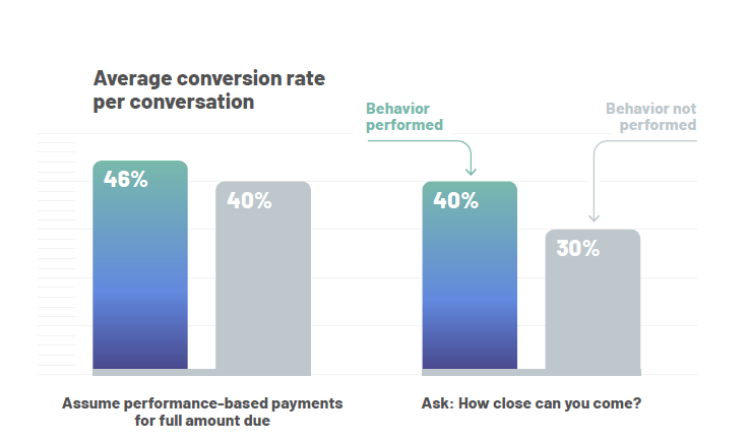
This collaboration led to the development of a revised “negotiate-to-pay” model, introducing a 30% initial payment structure combined with a shared workshare arrangement on contracted recruitment services. This model consistently produced stronger execution outcomes than assuming full upfront payment for RPO services, which previously introduced higher operational overhead, increased execution risk, and reduced willingness among stakeholders to proceed with higher-risk bidding scenarios.
This adjustment enabled STAHL to better map DigiTech AE behaviors to JV partner workflows, strengthening alignment across the ecosystem. It also fostered a more collaborative culture of empathy, transparency, and relationship-building across STAHL’s JV partners, including Thorben, Tape, and GuRoo (BiC-1.com).
As a result, DigiTech’s strategic sales capability within the STAHL framework improved and now supports its broader government contracting (GOVCON) market entry and growth as an emerging small business. Rather than exiting the partnership or pursuing litigation over delinquent execution behaviors—which would have introduced risk across the entire ecosystem—STAHL preserved contractual integrity, improved delivery compliance, and increased the probability of contract win outcomes while reducing overall partner risk.
A data management company wanted to achieve more sales of high-end risk monitoring and reporting on a channel management platform with data integration.
As the STAHL team expanded and more Account Executives (AEs) began working remotely, leadership at a large nationwide Data Management partner organization required greater visibility into AE engagements with targeted agencies to effectively support and improve the performance of their 20+ AE team.
Their existing tools depended on external contracting and a legal approval process before programs could be initiated. This created significant delays in execution, meaning AEs received limited real-time support, and any coaching, guidance, or event-driven enablement was often delivered weeks after the relevant conversations had already taken place.
To address these limitations, the organization partnered with STAHL to improve transparency and enable real-time performance support through the WizOz platform.
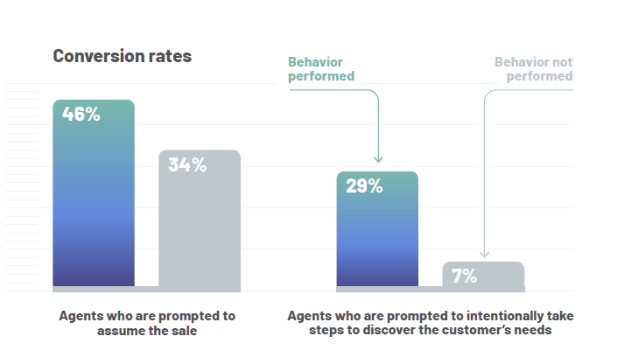
With the help of STAHL’s WizOz platform and generative AI, the company learned that AEs who are prompted to assume the sale see conversion rates of 46%, compared to only 34% if they fail to perform the behavior. Similarly, in conversations where AEs are prompted to intentionally take steps to discover the customer’s needs, the sales conversion rate is 29%, compared to only 7% in conversations where they do not.
But equally important, the company also discovered that not all sales are created equal.
Discounted sales are significantly more likely when a price objection is detected from the customer – 58% of Data packages are sold at a discount when a price objection is present. However, a sizable number of discounted sales are made without the price objection detected (42%) – suggesting that AEs may be leading with the discount rather than using it to overcome the objection due to lack of or latent process and support.
STAHL’s models helped the company discover that some “top producers” were discounting on a large percentage of calls (even if no price objection is offered), which may indicate a lack of value-building skill in those AEs, presenting an otherwise-hidden coaching opportunity.
These are the sorts of customized results BD and contract center leaders can expect from STAHL’s three-step approach — now we’ll dig into the identified steps that enabled these outcomes.
Three-Step Approach:
How Generative AI Drives Dependable Outcomes
Any AE will tell you that no two sales conversations are identical. And so, uncovering methods to improve sales performance necessarily requires a customized approach.
We know that behaviors like setting expectations and assuming the sale are employed by top performers generally, but to translate that knowledge into business-specific success, BD and contract center leaders need an outcome-inclusive view of what’s working (and what’s not) to empower agents and improve sales.
To that end, STAHL’s WizOz platform and generative AI identify key behaviors relevant to each of its partner businesses by ingesting thousands of documents and providing customers with diagnostic and reports used to adjust their current strategic customized playbook, thus creating a new, more powerful one that incorporates the identified behaviors into STAHL’s behavioral reinforcement.
Here’s a deeper look at the three key elements of how STAHL leverages in this process:
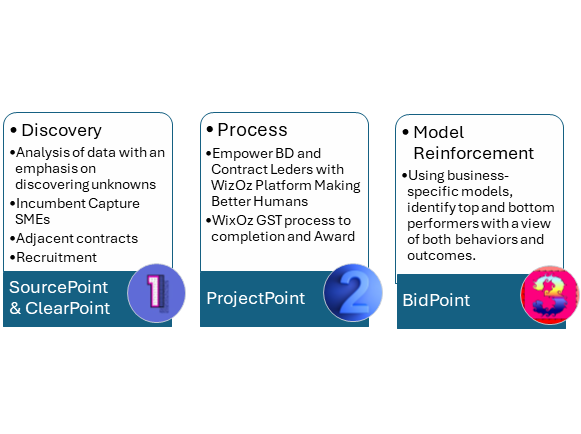
ONE – This means uncovering top performers and the behaviors they’re utilizing to drive sales, but it also means establishing a more detailed understanding of the strategic partner sales process. For example, an organization may know that their top performers use assumptive language at a far higher rate than bottom performers. But what words are they using? Which products or services specifically are sold and to whom and why, at a higher rate because of this behavior? Does it make a difference whether the conversation occurs on the phone, online, or via in-person?
TWO – With a more detailed view of performance thanks to thorough discovery, STAHL’s WizOz Platform, and generative AI produce tailored guidance to allow businesses to hyper-focus on specific outcomes. For example, if a business aims to improve revenue per conversation, the instinct may be to push sales AEs toward channel or upselling.
With STAHL’s WizOz Platform and generative AI, the business can understand which products or services are the most successful candidates for channel or upselling, which channel & upselling hints produce the best results, and how much additional revenue (on average) they can expect. As a result, BD and contract center leaders can target specific priorities with the confidence that they’re utilizing successful, sustainable, and repeatable strategies.
THREE – Agents-Account Executives (AEs) don’t like to feel under-thumb, but they also don’t like to feel unsupported. Striking the right balance can be tricky, but STAHL’s WizOz Platform and generative AI simplify the act. Our BD and Contract center leaders can deploy proven processes to drive specific outcomes, so AEs feel more effective and in turn, happier in their jobs while maintaining flexibility to be human in their conversations. What’s more, STAHL’s WizOz Platform and generative AI identify customized coaching opportunities, so agents always have the support they need when they need it.
Zooming in: A closer look at a big idea
As with anything complex, interconnected, and multifaceted, STAHL’s three-step approach to longer complex sales gives increased velocity to your sales which requires a wide range of individual inputs to build WizOz into your overarching system. In this case, those inputs take the form of features—complementary capabilities that enable STAHL’s WizOz Platform and its generative AI components to execute each stage of the process described above.
Some of the feature’s STAHL uses to drive revenue growth include:
- WizOz – Behavioral reinforcement
- PinPoint – Project Auto Cam – Summarization and Note Taking so that after-call work management doesn’t eat into productivity and (AEs) agents don’t get burnt out on rote tasks
- SourcePoint – Capture Value Alignment (CVA) and Discovery Assessment provides insights into your BD and contact center operations, discovering pivotal, KPI-driving moments in your conversations and quantifying their value.
- ClearPoint -Capture Knowledge Assisted to surface relevant information, improving (AEs) agents’ confidence and allowing them to focus on best practices
- BidPoint – Virtual Proposal Center Real-time coaching to ensure (PDM) agents have on-the-call support
- WizOz Outcome Insights: that harness STAHL’s powerful Insights capabilities to uncover a path to achieving specific and repeatable results

Chris Stahl
CEO/Founder Stahl Companies
Phone: 703-445-3450 (O) | 240-701-2434 (C)
Email: chris.stahl@stahl-companies.com
Website: https://stahlcompanies.com
Address: 176 Wardensville Grade Winchester VA 22602


